5 Ways Warehouse Safety Markings Enhance Efficiency and Minimise Hazards
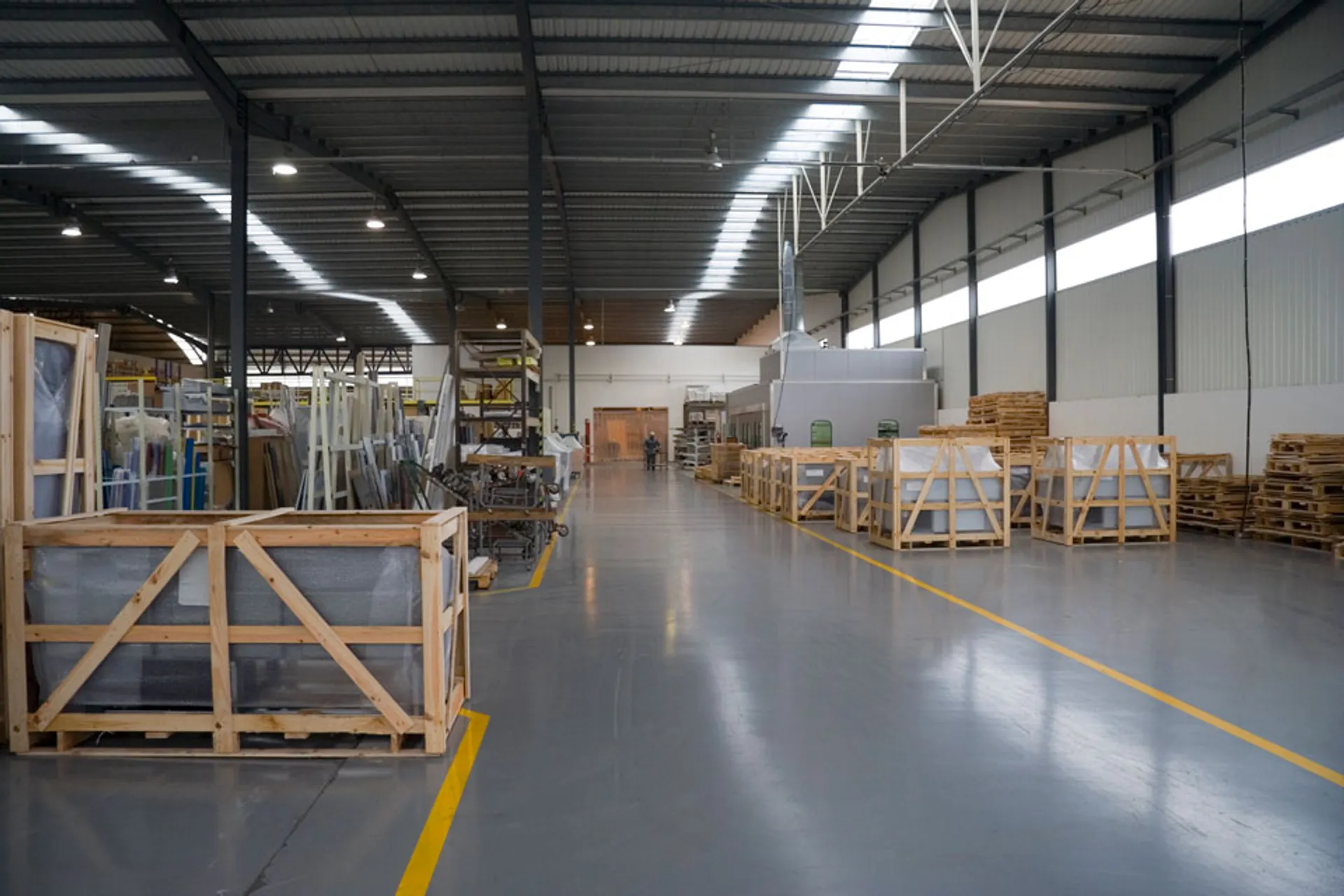
Professional warehouse safety markings are a foundational part of any effective health and safety strategy. With the busy end-of-year season approaching, optimising your warehouse for safety and peak efficiency is crucial. An unmarked or poorly organised floor is not just inefficient; it’s a significant operational risk that can lead to accidents, costly downtime, and failed HSE inspections.
This guide explores five key ways that professional warehouse safety markings, as supported with the HSE INDG412 guide for warehousing, can transform your site. It provides helpful, info based advice to help you learn about your needs, and then shows how a professional service can provide the solution.
1. Create Safe Pedestrian Walkways to Manage Traffic
What is the single biggest cause of accidents in a busy warehouse?
The Health and Safety Executive (HSE) consistently highlights collisions between vehicles and pedestrians as a top concern. The most effective way to manage this risk is to create a clear separation through a planned workplace traffic management system. Professionally marked pedestrian walkways provide designated, protected routes for staff, while different coloured lines can be used to define forklift only lanes, ensuring people and machinery are kept safely apart. This clear segregation is the primary function of effective warehouse safety markings.
2. Use Clearly Defined Zones to Maximise Efficiency
How much time is lost each day to disorganised stock or blocked access points?
An organised warehouse is a productive warehouse. Warehouse floor marking is the bedrock of proven efficiency systems like the 5S methodology. By creating clearly defined zones, you “Set in Order” your entire workspace, which speeds up every process from receiving goods to dispatch.
This includes:
- Pallet storage lanes to ensure neat rows and prevent stock damage.
- Loading and unloading bays for safe and efficient lorry turnarounds.
- “KEEP CLEAR” hatching in front of fire exits and first aid stations.
3. Make Hidden Hazards Unmissable with High Visibility Warehouse Safety Markings
It’s the hazards you don’t see often that cause the worst accidents. Are yours clearly visible?
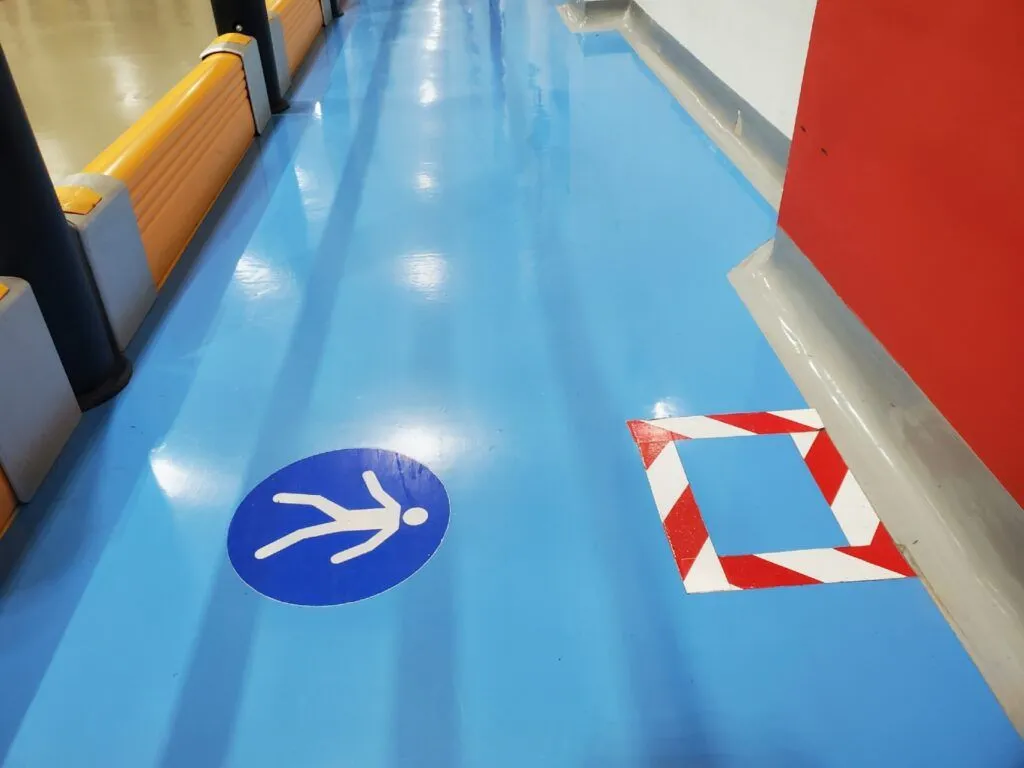
During a busy shift, it’s easy for staff to overlook physical hazards in their environment. High visibility markings are essential for drawing attention to these risks before an accident can happen. This is particularly important for areas that present a trip or fall risk. Using bright, striped, and contrasting colours is a proven way to increase situational awareness, especially for marking the edges of loading docks, the start of ramps, or unexpected steps.
4. Mark Clear Routes for Emergency Evacuation
In an emergency, could your team find the quickest and safest way out in seconds?
Under the Regulatory Reform (Fire Safety) Order 2005, all businesses must ensure clear, unobstructed emergency exit routes. In a complex warehouse, bold, unbroken lines on the floor are the most effective way to guide people to the nearest exit, even if visibility is poor. These routes must lead to clearly marked fire assembly points a safe distance outside, which are crucial for a fast and accurate roll call.
5. Prevent Slips and Falls with Anti-Skid Surfacing
Are your loading bays a slip hazard every time it rains?
Slips, trips, and falls are another leading cause of workplace injury. In areas prone to wetness or spills, such as loading bays exposed to the weather can cause a standard painted surface to be extremely slippery. The solution is to apply anti-skid surfacing. This is a high-friction surface treatment that provides essential grip in all conditions and can be applied in different colours to match your zone marking scheme.
Your Complete Warehouse Safety Markings Solution
Implementing a safety and efficiency system on your warehouse floor requires specialist knowledge and materials.
At GM Road Markings, our team are experts in creating durable and compliant warehouse safety markings for businesses across Lincolnshire, Yorkshire, and Nottinghamshire. Our service is comprehensive, covering everything from company logos and custom safety signs to walkways, storage zones, and hatched areas. We handle every stage, from an initial free site survey, where we provide expert advice to optimise your layout, to the final application using high quality thermoplastic. As your business grows, we can also provide line removal and updates to ensure your markings always match your operational needs.
Ready to get your warehouse prepared for the busy months ahead? Contact GM Road Markings today for a free site survey and a no-obligation quote from our specialists for your warehouse safety markings.
FAQ’s
Question: What is the best type of material for my warehouse floor markings?
Answer: For high-traffic areas with forklifts and heavy footfall, standard paint is not enough. The best solution for durability is heavy-duty thermoplastic. This is a specialist material that is heat applied to the surface and is specifically designed to withstand the daily wear and tear of a busy warehouse, making it a much better long-term investment.
Question: Can the warehouse safety markings work be done without shutting down my operations?
Answer: Yes. A professional marking company should understand that you cannot afford downtime. The work can be scheduled flexibly during your quietest periods, such as evenings, weekends, or planned shutdowns, to ensure there is minimal disruption to your business operations.
Question: Are there specific colours I should use for my warehouse safety markings?
Answer: While there aren’t strict laws on colours, the Health and Safety Executive (HSE) encourages following a consistent code for clarity. The common UK best practice is to use yellow for traffic routes and walkways, red for danger zones or fire equipment, and white for outlining storage areas. Black and yellow hatching is often used to highlight physical hazards.
Question: When should I consider using Anti-Skid Surfacing instead of just painted lines?
Answer: Anti-Skid Surfacing is essential in any area where the risk of slips, trips, and falls is high. This is particularly important for pedestrian walkways in areas prone to wetness, such as loading bays exposed to the weather, or on any ramps and slopes. It provides crucial extra grip that standard line markings alone cannot.
Free, no-obligation quotes
See if we cover your area
Enter your postcode to get started — most quotes begin right here.